
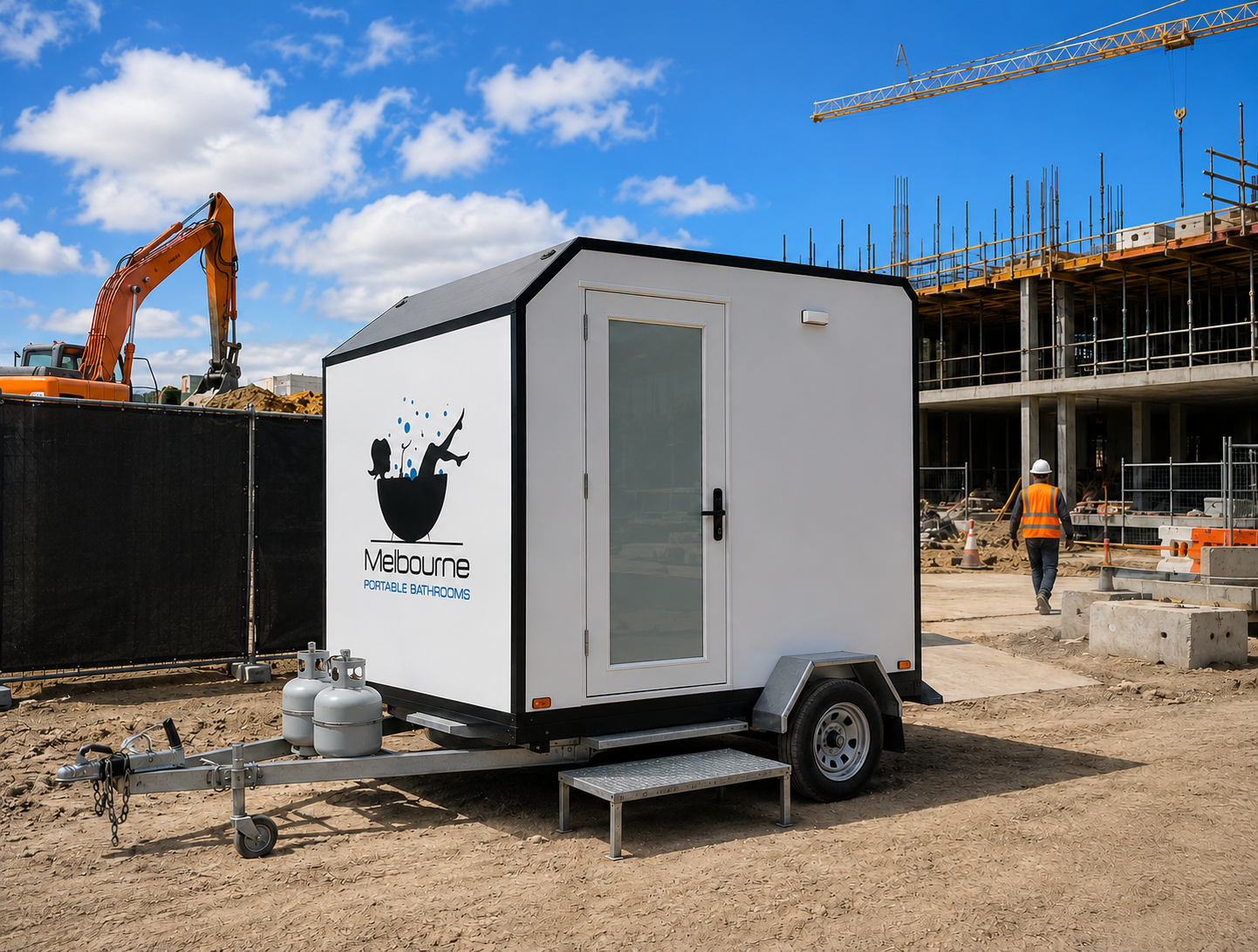
At a Glance
- Focus: Portable toilet hygiene during construction
- Critical Considerations: Placement, vehicle access, drainage, and future site changes
- Industry Recommendation: Based on Melbourne Portable Bathrooms’ experience, reviewing site conditions before portable toilet hire and installation helps maintain cleaner, more reliable facilities.
- Project Outcome: Better hygiene, smoother servicing, and fewer operational disruptions.
A portable toilet can arrive on site in clean condition and become difficult to maintain within days. The unit is not the problem neither is the servicing schedule. The major concern is where and how the facility was positioned when the project began. Busy construction sites result in conditions that hamper hygiene.
Melbourne Portable Bathrooms has supplied portable toilet hire for building sites across Melbourne. Our team knows how outcomes are determined well before the first worker uses the facility.
Changing access routes, compacted or muddy ground, heavy equipment movement, and inadequate initial planning all degrade cleanliness before servicing becomes the concern. This guide identifies the site setup errors that reduce hygiene standards and the practical measures that prevent them.
Why Does Site Setup Have Such A Big Impact On Portable Toilet Hygiene?
Placement determines every downstream outcome. The right unit positioned incorrectly results in servicing difficulties, waste accumulation, and using problems that no cleaning schedule can fully deal with.
Most guidance on construction site hygiene concentrates on cleaning frequency. Hygiene failures, however, begin with location decisions made on day one.
The position of a facility influences servicing vehicle access, waste removal efficiency, ventilation performance, consumable replenishment, and how workers approach and use the unit.
For builders using portable toilet hired for building sites, site planning should address:
- Ground that is stable and level enough to support the unit without shifting or settling.
- Vehicle access routes wide enough and clear enough for delivery, servicing, and collection at every stage of the project.
- Walking distance from primary work areas makes consistent use practical rather than inconvenient.
- Separation from heavy machinery corridors and excavation zones where mud and debris transfer is constant.
- Positioning that stays workable as the construction program changes around it.
Earthworks, scaffolding, temporary fencing, and material deliveries all close off routes that were clear on installation day. Access that works in week one may not work in week six without deliberate planning.
Keep Your Construction Site Clean From Day One
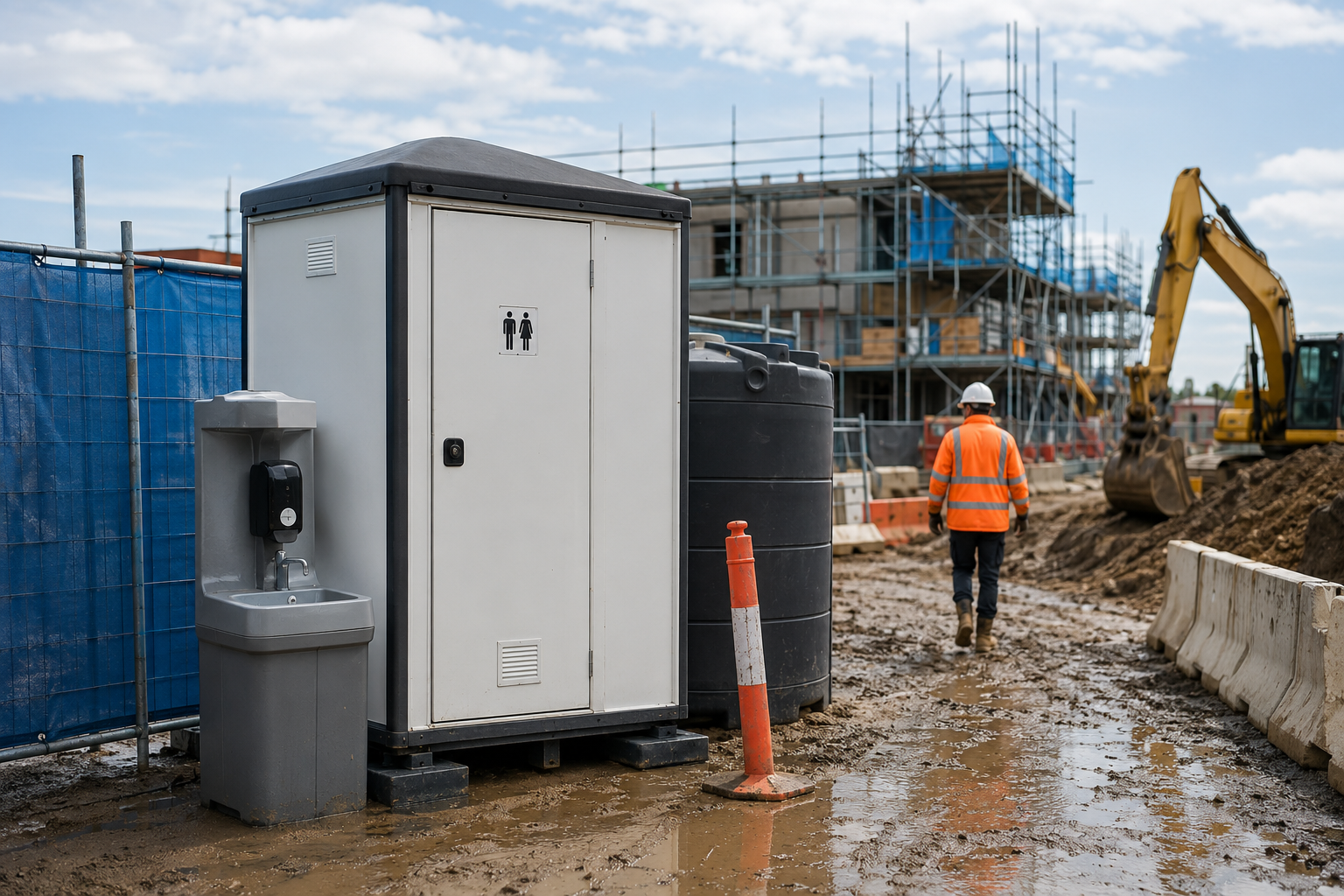
What Site Placement Mistakes Cause The Most Hygiene Problems?
Specific setup errors lead to predictable hygiene consequences. Recognising these patterns allows site managers to prevent common issues before they develop.
Most site planning guidance treats initial conditions as fixed. Ground that drains well in summer can become a muddy access problem after just two days of rain. Assessing site conditions over the full construction program, rather than only on delivery day, helps prevent these issues from developing mid-project.
|
Site Setup Error |
Why It Affects Hygiene |
Better Practice |
|
Installing on uneven ground |
Water pools beneath the unit, the base becomes unstable, and internal cleaning is impeded |
Identify firm, level ground before confirming the position |
|
Blocking servicing vehicle access |
Waste removal is delayed and consumables cannot be restocked on schedule |
Keep access routes clear and review them as the site changes |
|
Positioning near active excavation |
Mud, dust, and debris transfer onto approach paths and into the unit |
Maintain clearance from zones generating ground disturbance |
|
Ignoring drainage conditions |
Runoff accumulates around the entrance and creates contaminated approaches |
Select positions away from natural runoff paths |
|
Placing units beyond practical walking distance |
Workers avoid the facility and hygiene deteriorates through reduced use |
Position within a distance that does not discourage access |
Our team specifies level ground, power access, water supply, and a sewer or septic connection within serviceable distance as requirements for their portable toilet hire units. These are not preferences but rather the conditions under which the facility operates to the hygiene standard it was designed to meet.
How Does Servicing Access Affect Long Term Cleanliness?
Access determines whether the service schedule functions or collapses. When a service vehicle cannot reach the unit efficiently, waste removal falls behind, consumables run short, and condition checks are skipped.
Larger projects are more exposed to this problem. Temporary fencing, crane positioning, material laydown areas, and equipment movement each change the site around a fixed toilet location. Without periodic position reviews, a unit that was fully accessible in month one may be effectively stranded by month three.
Hiring toilets for construction sites requires access planning that maps against the full construction sequence, not just the conditions present at the time of delivery. None of that is a failure of the cleaning program. It is a failure of site positioning that the cleaning program cannot compensate for.
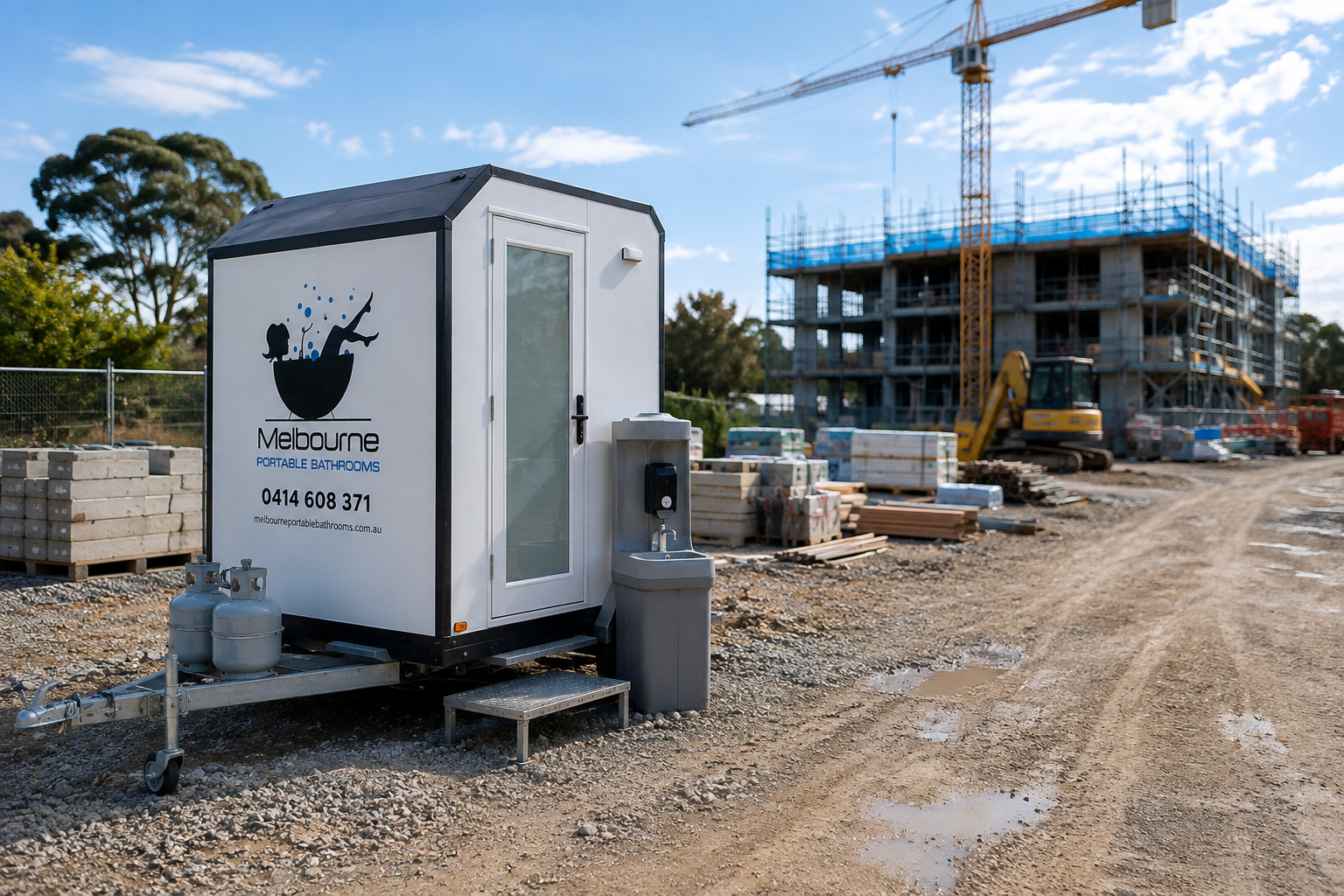
How Can Site Managers Keep Portable Toilets Hygienic Throughout The Project?
Setup establishes the baseline. Ongoing management determines whether that baseline is maintained.
Worker behaviour reflects the condition of the surrounding environment. A clean, dry approach to a facility encourages appropriate use. Muddy surrounds, overflowing waste receptacles nearby, and obstructed entries generate poor hygiene behaviour even when the unit itself has been recently serviced.
Effective ongoing hygiene management includes:
- Adjusting servicing frequency when workforce numbers change rather than holding to the original schedule regardless.
- Clearing access paths of materials and equipment after each delivery or trade movement to prevent route closures from accumulating.
- Watch the level of consumables between scheduled services instead of waiting until the next service to find out you need more.
- Assessing site conditions around the facility after rainfall and controlling drainage before standing water develops.
- Relocating when expanding work zones or access restrictions make the current position impractical.
Servicing alone does not create the measurable hygiene improvements that come from managing the environment around the facility. Construction site managers looking while hiring portable toilets in Melbourne need to plan for the whole user environment instead of just the unit specification.
When Should Portable Toilets Be Repositioned On A Build Site?
Initial positioning does not remain appropriate across a full construction program. Sites evolve, and facility locations should be reviewed and adjusted in response to those changes rather than left in place by default.
These triggers should be assessed at site meetings rather than identified only when complaints arrive. A relocation takes hours. Restoring hygiene standards after weeks of access failure takes considerably longer.
Repositioning is warranted when:
- Workforce growth creates congestion around the current facility position.
- Excavation, slab works, or foundation activity removes or blocks the established access route.
- Temporary fencing redirects pedestrian traffic away from the facility location.
- Crane set-up or material storage occupies the surrounding area.
- Sustained wet weather degrades drainage to the point where the approach becomes contaminated.
Why Does Choosing The Right Provider Matter?
Unit quality sets the ceiling on hygiene performance. Provider capability determines whether that ceiling is reached.
A provider who establishes site requirements before delivery, rather than discovering access or connection problems after the unit arrives, removes the most common source of early-stage operational failure.
Treating the delivery as the start of an ongoing service arrangement rather than a single transaction produces better hygiene outcomes across the project duration because site changes are managed rather than reacted to.
Construction Site Hygiene Starts With the Right Partner
Conclusion
Clean portable toilets on construction sites result from deliberate planning, correct initial positioning, and systematic review as construction progresses. Location decisions, drainage conditions, servicing access, and the surrounding environment each influence hygiene outcomes as directly as the cleaning schedule does. Melbourne Portable Bathrooms brings extensive experience supplying toilet hire for construction sites across Melbourne.
Throughout the blog, we understood how the site is evaluated and requirements verified before installation begins, giving the builder reliable, hygienic facilities that sustain performance as the project develops around them. If you’re looking for the right unit for your site, contact us today and we’ll help you get the right solution that fits your project conditions and timeline.
FAQs
How often should portable toilets be serviced on a construction site?
Frequency of servicing should be based on workforce size, project stage and existing site conditions. A schedule determined at the beginning of a project may not be adequate when peak trades are on site. Changing frequency when headcount changes allows waste capacity and consumables availability to be maintained without a fixed interval that may no longer reflect actual usage.
Can portable toilets be installed before construction begins?
Yes, and early installation removes access problems before they develop. Once heavy equipment, material stockpiles, and temporary structures are established across the site, finding a suitable position that meets ground, access, and connection requirements becomes more constrained. Installing facilities at project commencement avoids that constraint entirely.
What site conditions should be checked prior to delivery?
Level and stable ground, width and clearance for vehicle access, availability of power and water connections where required, proximity to sewer or septic and adequate space for installation, servicing operations and future repositioning if the site layout changes.
Why is portable toilet placement reviewed during construction?
Construction sites change continuously as work progresses. Reviewing facility positions maintains safe servicing access, keeps facilities convenient for workers, and prevents positioning decisions made at project commencement from generating hygiene problems at later project stages.